Wednesday, 28 September 2016

The CONVERT trial has shown that the use of modern radiotherapy techniques is reducing side effects in small cell lung cancer patients - Professor Corinne Faivre-Finn

Corinne Faivre-Finn, Professor of thoracic radiation oncology and honorary consultant clinical oncologist 

Professor Corinne Faivre-Finn
I attended the international ASCO Cancer Conference this summer, where I was delighted and privileged to present the results of the CONVERT clinical trial that myself and colleagues from The Christie, the UK and around the world have been working on for nearly a decade. CONVERT is the largest study ever completed in this group of patients.  

The aim of CONVERT was to establish a standard combination of chemotherapy and radiotherapy in small cell lung cancer that hasn’t spread. Before this study it was unclear whether having radiotherapy once or twice a day helped more patients survive for longer and what level of side effects was expected with modern radiotherapy techniques.

Around 550 patients from around the world were split into two groups, one group received radiotherapy twice a day over three weeks (standard treatment) and the other once a day at a higher dose over six and a half weeks (experimental treatment). All patients also had chemotherapy. 

Colleagues from The University of Manchester, The Christie, around the UK, France, Spain, Belgium, Netherlands, Poland, Slovenia and Canada compared survival and side effects for both groups. The first patient was enrolled in the study in April 2008 and the last patient in November 2013. 

We found that small cell lung cancer patients live longer and with fewer side effects than previous studies.

The length of survival in both groups was similar with 56 per cent of patients who had radiotherapy twice a day surviving for two years compared with 51 per cent of those given it once a day. Importantly, the majority of side effects from radiotherapy were similar in both groups. 

Compared to previous studies, we found that half the number of patients than expected experienced complications that required a stay in hospital. This reduction in side-effects is likely to be due to the use of modern radiotherapy techniques.

We are very pleased that our results are providing robust evidence on the best way to treat small cell lung cancer that hasn’t spread outside the chest. Based on our findings, twice–daily radiotherapy with chemotherapy should continue to be considered the standard of care, as once-daily radiotherapy did not prove that survival improved compared to the standard twice-daily treatment. However, given the similar results in both groups it is reasonable to offer once daily radiotherapy if twice daily treatment cannot be delivered due to either patients or the hospital’s preference. Patients can now plan their treatment with their doctors according to what works best for them and their hospital.

Although the trial will still be following up patients for five years, the results are already changing clinical practice within the UK and internationally. We have received many testimonies from patients who are very grateful to be alive several years after receiving treatment. 

There have been too many people involved in CONVERT to thank them all individually, but this trial was a fantastic international collaboration that could not have achieved its results without the dedication, commitment and support of countless colleagues.  The study was funded by Cancer Research UK and was developed with, set-up and co-ordinated by the Manchester Academic Health Science Centre Clinical Trials Unit which is based here at The Christie.

More information about the CONVERT trial is available here.

For further information about Professor Corinne Faivre-Finn visit her consultant profile.


Monday, 19 September 2016

The power of small gestures - Graham Lamb

Graham Lamb, Cook Team Manager at The Christie

Graham Lamb
Small gestures can make a big difference - a simple smile and a thank you go a long way. As a member of the catering team at The Christie, we know this only too well, and will always go the extra mile to help our patients. 

What we do is a very important part of the patient experience, but working in a place where everyone has been touched by cancer can be even more rewarding.

That’s one of the reasons why The Christie has set up a serious of monthly meetings for its staff to discuss their feelings and to share their experiences. These meetings are called Schwartz Rounds and I was delighted to have been asked to give a presentation at one recently. The theme of the discussion was the ‘The Power of Small Gestures’. 

At first I struggled to think about what I should speak about. But then I started to think about what we in the catering department actually do on a day-to-day basis and how our department makes a difference to patients, visitors and staff. We do some pretty impressive things and we also understand the power of small gestures.

Every day we come to work and do our jobs but never take the time to appreciate how much hard work, care and dedication we put in, and it is only by reflecting on and talking about it through the Schwartz Rounds that we have the chance to stop and do that, which is quite an eye opening thing to do, and is also very cathartic.

Most people don’t realise how often we are asked to visit patients on the wards when they have specific dietary requirements, or because their treatments or personal preferences mean they can’t always find meals to suit their palate. We often tailor menus to suit individual patients and revisit them every couple of days to plan the meals for the following period. Simply by doing this we find patients are more open to discussing their meals and in some cases, when their preferences may seem a little strange, they feel more comfortable  speaking to us rather than the ward staff because often they haven’t considered the possibility that we can provide alternative choices outside of the standard menu.

Through visiting a ward we get to see a patient over a period of time. It’s very rewarding to see a noticeable improvement in a patient , especially those who are eating properly again through our input. The flip side of this is that it can be very upsetting in a small number of cases to see a patient continue to deteriorate, despite the best efforts of all the doctors and nurses, and of course our own team that works so hard to find choices of food that the patient will want to eat.

Simply by discussing and planning their meals with us, patients feel included and empowered and are more inclined to try and eat their meal because they have had an input into it. 

Through communicating, encouraging and involving the patients we know that we go the extra mile to offer the best service. It is always appreciated by the patients and when they say “thank you”, that gesture always makes what we do worthwhile, no matter how tiring the day has been, we focus on that gesture.

One example of how the catering team has gone the extra mile for patients was when a very poorly patient in the last days of life wanted to get married. We got a call at 11am that morning to say the wedding was taking place at lunchtime and could we provide a wedding buffet, including a wedding cake, to be served at 1pm. How could we refuse a request like that! 

So we pulled together as a team with all the usual mayhem going on around us and managed to deliver a wedding buffet as well as a cake with chocolate balloons, hearts and the couples’ names iced onto the cake. 

Knowing that we had done something so special for someone in their dying days was hugely rewarding and we know that most patients really appreciate that. It’s equally rewarding when the efforts we go to are recognised by our colleagues with a simple thank you – the power of small gestures really can make a big difference, but are all too easily overlooked!

Most people only see the ward service or the restaurant service and don’t appreciate what goes on behind the scenes to ensure those services are delivered on time. For example we serve around 1,500 meals per day to patients and staff, all freshly prepared and cooked on the premises. No microwave meals like a lot of hospitals serve to patients! It’s essential that we send the patient trolleys out to the wards on time and ensure the restaurant service is set up and ready to go each day. We often have buffets to do for meetings and the odd wedding breakfast to provide as well, so team work is essential.

So our days can be interspersed with ups and downs, positive and negative gestures, however, as always, a positive gesture from a patient cancels out anything negative about the day, making our jobs even more worthwhile, and giving us a great deal of job satisfaction. Working at The Christie and helping our patients really is a special experience. 

The Christie is like a jigsaw and we all make up that jigsaw, no matter what job we do. We all form part of that jigsaw and if any piece is missing, the jigsaw can never be completed. Each piece of the jigsaw is also like one of those small gestures, and without the thousands of small gestures everyday, our Christie jigsaw would be incomplete! 

Monday, 12 September 2016

This year’s Christie Will Week is more popular than ever - Caroline Harrington

Caroline Harrington, Partner, Furness Evans Solicitors 

Caroline Harrington
Like many people in the North West I’ve experienced the amazing staff at The Christie so it’s my pleasure to help fundraise so they can continue with their fantastic and necessary work.
  
Furness Evans is based in Cadishead and prides itself on being a local firm for local people. 

Our aim is to make our clients feel valued and know they can rely on us during difficult times.  

Cadishead has a strong community spirit and this was one of the reasons I chose to move to Furness Evans nearly four years ago.   

The people of Cadishead, Irlam and surrounding areas are extremely generous people and like nothing better than rallying around to help out. I believe this is one of the reasons why this year’s Christie Will Week is more popular than ever. 

To increase awareness of this year’s Make a Will Week I placed a small article in the local free magazine and the response has been overwhelming. I know I shouldn’t be surprised as it’s always been clear to me how generous the local community is but nevertheless I have been overwhelmed by the response.  

Make a Will Week enables me to draft wills free of charge, which in turn means my clients are free to donate my fee to The Christie.  

In light of this, I’m extending my availability to the following week and would urge people to prepare a will and help The Christie.  

Many people put off making a will – some feel it is tempting fate, that they don’t have enough money for it to be worthwhile or simply that they don’t know what is involved. 

Having a will is invaluable – it ensures your money is dealt with how you would want it to be and helps those left behind deal with the estate with your guidance.  

It’s such a good feeling to know that our firm is helping to make a difference.  During Make a Will week, I’ve been inspired and touched to hear people’s experience of The Christie.  

Even if the outcome wasn’t what they wanted, the facilities have been described as amazing with the level of care and support provided by the staff described as life affirming. It is a facility that we all hope we will never need to make use of but is there should we or one of our loved ones need to.  

I have to stop writing now as my phone has just rung - someone has nipped in to make an appointment for Make a Will Week! I hope to see you too – please feel free to give me a call or pop into our office to make an appointment.  


Monday, 5 September 2016

The Christie charity is a very inspirational place to work and is full of people who want to make a difference - Louise Stimson

Louise Stimson, Head of Fundraising, The Christie charity

Being a Manchester girl I am so proud to be the Head of Fundraising at The Christie charity. Friends and family members have passed through The Christie doors at one point or another, which made me more determined to work here.  

I am so pleased to be part of a much loved Manchester institution that helps so many people.

At The Christie charity we raise funds to provide services for patients that go above and beyond what the NHS is able to provide. Whether we are funding the art room or big construction projects such as the forthcoming Integrated Procedures Unit, our primary concern is ensuring that patients are able to receive the best treatment and care possible.  

When I started in my role a year ago, in September, I remember being really excited to work here. Meeting my team and other colleagues only reaffirmed that I had made the right move. The charity is a very inspirational place to work and is full of people who want to make a difference. I see this passion from our staff on a daily basis.

One of my first duties when I started was to host the ‘Walk of Hope’ at Tatton Park. Meeting so many inspirational people in one evening was quite overwhelming but it left such a positive impression on me.  

Walking through the corridors in the hospital and seeing patients being helped by our hospital staff reminds me why I’m here and constantly reignites my passion for raising those much needed funds.

People have many different reasons for fundraising for us, they might be receiving treatment here or might have been a patient themselves in the past. We also have lots of fundraisers who are the friends or relatives of someone who has been treated by The Christie. I hear wonderful stories from our supporters all the time about the excellent treatment and care they have had from the doctors and nurses.

Our supporters raised an amazing £15.9 million last year which is the most we have ever raised. It makes me so proud to head up this successful fundraising team which, through the money raised, makes such a huge difference to the lives of Christie patients.

This year we have introduced a number of exciting new events, one of them being the Fire Walk in March which definitely caught our supporters interest. As it was so popular we are hosting another one next March so sign up quick! As I’m not a runner or a cyclist, this event enabled me to participate in one of our sporting challenges. It was certainly nerve wracking to be the first person to walk across the coals that evening but I’m so glad to have taken part. My next challenge will be the Great North Swim next year and I will be starting my training soon!

We are a very fortunate charity as we have so many active supporters, but we need that support more than ever. We have exciting and ambitious plans for the future.

We want to be able to continue to bring more of the world’s leading cancer experts and their teams to Manchester as part of our academic investment plan focusing particularly on six identified themes - lung cancer, radiation therapy, haematological oncology, women’s cancer, melanoma and personalised/stratified cancer therapy.

We also plan to bring more state of the art innovative equipment to The Christie, including a revolutionary MR Linac scanner enabling experts to deliver more targeted, personalised and advanced radiotherapy for our patients.

We are also raising £4.8m to build an Integrated Procedure Unit. This development is needed to match demand for day case medical procedures such as minor surgery and endoscopies, which are all increasing. This will enable a patient’s treatment to be less fragmented across the site.

Our fundraising continues this year for a dedicated research room on our new proton beam therapy centre, and it is wonderful to see the build progressing so fast on the site. This year we will also be raising funds to replace the outdated patient entertainment system with a hospital wide, multi-media entertainment and information system. Our vision is that this will be a mobile ‘in-flight’ style infotainment service for both inpatients and outpatients.

We will be launching a new fundraising campaign in the autumn which I know will inspire more and more people to get involved with the charity. I can’t say much more about it at the moment but it’s all very exciting!  We are also so pleased this year to be able to announce that we are the official charity partner for the 2017 Great Manchester Run. We will have the partnership for the next three years and it also involves the introduction of a new half marathon on the same day! Soon we will also be announcing a new event that we will be hosting in March 2017 at Beetham Tower in Manchester City centre. Watch this space!

One thing I’ve learnt in this job is that there are always lots of great things going on at The Christie and lots to do to make sure we can fund them, but I know that my team and I wouldn’t have it any other way. It’s an absolute pleasure to do what we do and I’m very lucky to do this job.


Tuesday, 30 August 2016

I am so grateful that my oncologist and surgeon supported my decision to continue working - Geraldine Leydon

Geraldine Leydon, Christie Patient

Geraldine Leydon
I have just turned 50, feel very content and have so much to look forward to. My husband Tommy, our two girls and I are currently in New Zealand, part of a travelling fellowship from the Winston Churchill Memorial Trust to research international best practice in early years care and education.  

It seems a long, long time since the night in 2011 when my husband and I were given some difficult news that left us dazed, that I had cancer.

I had made a number of visits to my GP with what could in hindsight be described as atypical symptoms.  Eventually I happened upon Professor Gordon Carlson, who advised a precautionary colonoscopy. The colonoscopy helped to diagnose a very aggressive bowel cancer, more specifically a T4 N0 bowel cancer. 

It came as a huge shock at 45 years old, particularly as there was no previous history of cancer in my family.  

It was a trying circumstance for obvious reasons, which coincided with me changing jobs. 
In hindsight however, this proved to be a useful distraction from the ongoing treatment. My surgeon and oncologist were remarkably positive and motivating people, urging me to work as I wanted to and felt able. 

The new job, gave the family as a whole something else to focus on outside of the cancer bubble in which we felt encircled. Interestingly, I did not find that this was something that some people understood.   

Some people suggested that I might want to give up work. For me, I chose to work part-time, as that was right for my family and I at that point in our lives. 

I went to Salford Royal for my colorectal surgery under the care of Prof Carlson and the treatment was first rate. There were very structured and focused opportunities to prepare for what the treatment had in store for me. 

This was followed up with six months of chemotherapy at The Christie under the diligent care of Dr Mark Saunders. The Christie is an infamous institution and was known to me, as I am local to the hospital and passed it and its visitors regularly.  

Becoming one of ‘those people’ who needed to go there was one of the most unexpected and hardest feelings that I had to overcome.  However, those feelings passed remarkable quickly and my monthly visits became part of life’s routine.  

Now, five years on, I have gained a distinction in my Master’s in Education Degree and I have been accepted onto the Educational Doctorate. 

Most exciting of all is the travelling fellowship from the Winston Churchill Memorial Trust. I have travelled to Germany to observe a programme called Baby Watching and I am now in New Zealand visiting universities, the world famous Dunedin project and preschool settings working with the Te Whariki curriculum. 

Geraldine and family in New Zealand
I hope that cancer patients reading this will be inspired and that it will give them hope. I am so grateful that my oncologist and surgeon supported my decision to continue working. My work is my passion (family excluded) and I feel glad I did not give up work as that was the right decision for me.

And of course whilst I am in New Zealand and Australia with Tommy and my gorgeous girls we are having a little holiday!

Geraldine's blog is at http://eyfs.info/forums/topic/46559-travelling-fellowship-research-study-in-new-zealand-and-germany/


Monday, 22 August 2016

As I walk into the hospital as an art room volunteer I feel the optimistic happy atmosphere - Lin Sinclair

Lin Sinclair, Christie art room volunteer


Lin Sinclair
A few years ago my mother came to The Christie to be treated for cancer for about six weeks. She had intensive radiotherapy virtually every day which made her very red and sore.

She told me the nurses used to put cream on her to ease the pain and rawness, and how gentle they were with her. The doctors were also marvellous with her and very sympathetic.

Mum had always said she was a coward, but she was the opposite, she was very courageous, she accepted what she had to go through, and got on with it. She was amazing.

I visited mum every day at The Christie, on my way home from work, which was 40 miles away. It was a really stressful time, but I knew she was in the safest place she could possibly be. I had total faith in The Christie.

As soon as I walked through the hospital entrance I felt calm and peaceful. This feeling has never changed, and carried on when I became a volunteer a few years later.

I think this feeling started from the initial consultation with the doctor. She said to mum “I think we can help you, and get rid of the cancer,” and I believed her.

Eventually mum's skin completely healed and the doctor told her she was cured. They actually used that word, the cancer had gone and they didn’t think it would come back. I couldn’t believe it. But they were right, it didn’t come back.

Before I retired, I had The Christie in the back of my mind, as a place I’d like to work as a volunteer.

I began by doing surveys about the patient experience at The Christie. This could be on the wards themselves or in different parts of the hospital.

I found it fascinating because patients wanted to talk. One teenage boy said to me that the nurses on his ward were more of a family to him than his own family. Even now, I cannot think about that without being extremely moved.

It’s like that through the whole hospital, everyone says the same thing. They all praise the amazing, dedicated, kind staff.

Eventually, I was told there was a vacancy in the art room for a volunteer. It appealed to me because my background is in art and design.

All Christie patients are able to go to the art room, regardless of whether they have any experience in painting or art. They are welcomed with open arms. You don’t need an appointment, you just turn up.

I did not know what to expect, but was stunned when I walked through the door at the high standard of the work.

The patients have an inspirational teacher, Pat, who is rated very highly by everyone in the art room. Her humour and encouragement soon puts everyone at ease, and they start painting and experimenting from the very first session.

Many of the paintings are exhibited on the walls of the hospital and some are for sale too at regular exhibitions. The sale of paintings helps to raise money for The Christie charity which funds the art room and many of the other extra services that the NHS can’t pay for at The Christie.

The art room exists for a very good reason. It’s to take the patient’s mind off their cancer for a few hours. This sounds simplistic but this is a highly complex situation that has a massive psychological effect.

People come to the art room at different stages of their cancer. Some have just been diagnosed, others are having treatment or have had treatment.

They are dealing with the diagnosis, the treatment, plus the effect it is having on their body and their mind. For many it can be overwhelming.

But when they have a paintbrush in their hand and a blank canvas in front of them, they are concentrating on the painting and not the cancer. They are creating something. It seems to change their mental state. They have a new goal and a new focus.

In some cases they are doing something they never thought they were capable of. The whole atmosphere of the room has a calming effect on their minds.

The men and women in the room are able to talk about their cancer to other people who are going through the same thing and share their feelings. They all know how they are feeling, because they have cancer too.

I had no conception of the devastating and complex effect cancer can have on the mental state of someone, regardless of the physical effects of the treatment.

Some people say it completely shatters their confidence. One person said to me that in the very first week of being in the art room her confidence came back. It had changed her life. It’s difficult to understand that, until someone tells you face to face.

There is an intimate, family atmosphere in the art room and friendships are formed and a lot of mutual support is given. There is a lot of humour and affection.

This is not professional art therapy, as the teacher Pat is clear to point out, it’s the actual act of painting that has a therapeutic effect.

My mum was a painter, but she did not go to the art room at The Christie, which I am sure she would have enjoyed.

This is no ordinary art class, it is extraordinary. It is full of humanity, warmth and hope.

When I walk into The Christie, I am always overwhelmed with the optimistic happy atmosphere. It has changed my life too.

Thursday, 11 August 2016

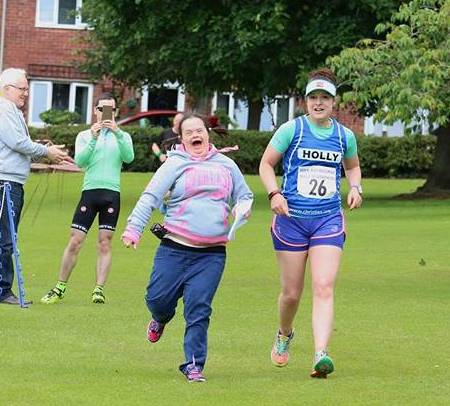
I wanted to take on a challenge where I’d knew I’d suffer because I wanted to repay The Christie for caring for my mum - Holly Bloor

Holly Bloor, Christie fundraiser

I wanted to start my blog with words contributed by some of the people I know who have had family, friends and loved ones who have had, or are currently battling, cancer. Here’s what they said as dedications:


Cynthia's friend, Steven – positive, a fighter, a new husband.

Julia's twin, Andy – loved by all (Andy Stubbs died 15th July 2016).

Jane's friend, Lesley - never stopped smiling.

Mandy's sister, Michelle – youthful, inspirational, a fighter, beautiful (Michelle Adams died 31st July 2016).

Simon's gran, Joan – brave and inspirational. She will live long in the memories of many (Joan Mitchell died 29th April, 2016).

Donna's mum and dad, Sheila and Barry – as parents caring, generous and selfless. In life, happy and lively. Proud that they were mine! (Sheila Spooner died 28th August 1995 and Barry Spooner died 18th December 2013).


Some of these battles have been won and some lost, some still continue. These words illustrate that cancer is something we all encounter.

In my case I lost my gran to cancer and now my mum is fighting it.

Mum was diagnosed with ovarian cancer in 2014. When someone you love is first diagnosed with cancer it feels like someone has stamped a big full stop at the end of your happiness and it’s really hard to get past the initial feelings of despair.

My mum’s outlook towards her illness is a mixture of positivity, stubbornness and compassion. She just gets on with it; the endless hospital appointments, waiting rooms, scans, blood tests, results, fatigue and nausea. Cancer is an inconvenience! But it is never going to get in the way of her looking after her daughter and my sister, Amy.

Amy is my little sister and she has Down’s syndrome, so my mum is a carer first and has cancer second!

I find a positive attitude like my mum’s is contagious.

Shortly after being diagnosed, she began treatment at The Christie and after every appointment she came home singing the hospital’s praises. She compliments the nurses, doctors, cleaners and people who serve tea in the café, telling me how their friendly and cheerful nature helps her keep her chin up.

She enjoys the memorial garden and I can see for myself from her photographs how beautiful it is. She talks about the hand massages and reflexology on offer to patients. These are small things but they go a long way if you have cancer.

Hearing her talk about The Christie I was inspired to stop moping and get off my bum and do something. I felt totally powerless to help fight my mum’s cancer and realised that the only thing I can do is to try and raise a few pennies to help The Christie charity. I feel indebted to The Christie for helping my mum and I figured I could thank them and help them fight cancer at the same time.

I wanted to fundraise for my mum, for the people I mentioned at the start of this blog and for all those affected by cancer. So I thought about the worst thing I could put myself through and it soon sprang to mind… running. I absolutely hate it!

I sat and thought a bit… I’ll do the Potters half! Then my brain ticked a bit more. No, that’s only one race and the more I suffer the more money people will give me. So, for inspiration, I read a bit about the history of The Christie hospital. I learnt that in 1901 it was renamed The Christie in honour of Richard Christie and his wife Mary. That gave me an idea, what if I run a race for every 10 years it has been The Christie!

So I signed up for the Potters Arf’.

My first run was in late January. It was cold, wet and dark - perfect running conditions…or not. But I was inspired! I was going to become a runner! As I laced up my shiny new trainers I considered how far I should run. Ten miles, eight miles … But I decided on five. Don’t get carried away I thought to myself - it is your first run!

Twenty minutes later I fell through my front door; red faced, sweating and out of breath. My calf muscles, which I didn’t think even existed (I’d certainly never seen them anyway) were so tight that when I had finally picked myself up from the floor, I couldn’t lift my feet and had to shuffle to the settee. Once I’d regained some composure I glanced at Strava (other activity tracking apps are available) and it said I’d run 1.2Km!! I’d only run 1.2Km, not even a mile! One half marathon seemed impossible never mind six full marathons in a row!

I decided that my challenge was suitable. I’d confirmed that I was rubbish at running and so I’d suffer plenty! I would definitely deserve sponsorship! I started to sign up for races; The Potters Arf in June, Ashbourne Half in July, Newark Half in August, Great North Run in September, Manchester Half in October and Lancaster Half in November (the last day of my honeymoon I might add). Following this, I will do six full marathons.

So the day of ‘The Potters Arf’ arrived - June 12th 2016. Ahead of me lay 13.1 miles of running and 260m of hills. At 10am I was waiting to start, surrounded by proper runners uttering phrases such as ‘PB’, ‘Sub 1:45’ and ‘8 minute splits’. At this point my ‘PB’ was managing to only swallow two flies on a training run (I run with my mouth open).

I tucked myself in near the back, next to a Teenage Mutant Ninja Turtle, a helicopter and two bumble bees. Then 10:30am came and we were off! Surprisingly, I soon settled into the run and began to have a whale of a time. The public support was fantastic and I was propelled along by the crowd. At several points throughout the run I heard people shout for The Christie and cheer. The feeling of pride to be running for such a fantastic and well-loved charity was really quite overwhelming. I ran across the finish line in 2:16:56, no ‘sub 1:45’ but not too embarrassing.

Next up was the Ashbourne Half on July 3rd 2016, the same 13.1 miles, but 320m of hills to climb. I was more nervous this time, surrounded by proper runners with lean muscled legs and compression socks, and not a single charity runner in sight. This was going to be a tough half marathon in the peak district, with hills, hills and more hills on a very hot day.
I soon began to suffer. The hills started in the first mile and continued for the next eight! I found myself chuntering ’blinking hills’ as I plodded along. Luckily I had fantastic support from my partner Sean, who cycled to certain points of the race and thrust water and energy gels at me as I stumbled past.

This race felt like the longest 13.1 miles ever and by the last mile I was totally exhausted. However, as I entered the last 500m I saw my little sis Amy and the rest of my family and it was all worth it. Amy even raced to the finish with me and was far sprightlier than me.

To be honest, despite training I haven’t really improved. Now I just run farther, but the end result is still the same – a red, sweaty mess. When I’m out running I often encounter other female runners. I watch them run past gracefully with their long legs in little shorts and no cellulite! When will I start look like that!

I’m now two half marathons into my challenge and so far I’m four toenails down with a fifth one looking dubious. I’ve swallowed millions of bugs and at least one moth! Half of my body is chafed but (at the point of writing) I’ve raised £853.50 of my £1,000 target, so every second of suffering is worth it and let’s face it, this is insignificant suffering compared with having cancer. Cancer really sucks.

I feel almost like we are in a war. A war against a tiny enemy that we can’t see and don’t truly understand. There are millions of fundraisers like myself and I view us as the foot soldiers. We walk, run, swim, climb, hurl ourselves out of planes and off bridges, bake cakes and shave our heads to try and to raise as much money as we can in order to provide the ammunition to fight cancer. But we are not the heroes, those with cancer are the true heroes.


Help me say thank you to The Christie for my mum and millions of others at www.justgiving.com/Holly-Bloor3

Tuesday, 2 August 2016

We want to develop our radiology service to be one of the best in the world - Gregory Royal

Gregory Royal – interventional radiographer

Gregory Royal
I have been a radiographer for 19 years. During that time I have worked mainly in the acute setting and since 2008 specialised in interventional radiology. This is an area of radiology where we aim to treat patients rather than purely diagnose them. 

We use specialised equipment (catheters and stents etc) along with real time x-ray. My role in this field is to provide best quality imaging, often for very sick patients undergoing the treatments.

Having worked in Manchester for most of my 19 years as a radiographer (I some time spent in London and seeing the world), I have known about The Christie for a long time. I knew it was a cancer centre with a world-wide reputation. 

I had been working as the interventional radiology lead in a nearby hospital (running the service there), but when I heard that the Christie had a vacancy for an interventional radiology team leader I jumped at the chance to apply. 

Upon visiting the department at The Christie, I discovered that a new unit was being planned and if I got the job I would get to be part of it. Fortunately I was successful in being appointed.

I started at The Christie at the end of May 2015 and found everyone very welcoming. The first impression I got was how patient focused the staff are and how enthusiastic people are to help. I’ve always had the most job satisfaction from helping patients. Rightly, that should be the main focus for all healthcare workers, but at The Christie the standards of patient care are at a much higher level.  This obviously makes me proud to work at The Christie and proud of our staff.

Within my job I spend approximately 80% of my time involved in a clinical role and this is without a doubt the most appealing part of what I do. As the team lead for radiology 2, I make sure services such as ultrasound, in-patient plain film and interventional radiology run as best they can. I have a great team to work with, which includes not just radiographers and radiologists, but also nurses, a co-ordinator, clerical staff and porters.  

The other 20% of my time is spent on management issues and duties. The biggest of these is currently being part of the sub-group developing the operational side of the new Integrated Procedures Unit (IPU) which is currently being built on the Oak Road side of our site above the main entrance. This is an exciting development for The Christie overall but also for the interventional radiology team. It means we can build on and cement the excellent oncology procedures and care we provide so as to truly take the service forward and make it world class – our patients deserve nothing less!

Moving to The Christie was the best career choice I could have made and I couldn’t be happier in my work life. I get the chance to spend time with patients and along with some fantastic colleagues to affect change and develop our radiology service to be one of the best.

Tuesday, 26 July 2016

Only The Christie could offer me the surgery I most wanted for my breast cancer, a mastectomy and a natural tissue reconstruction - Bernadette Featherstone

Bernadette Featherstone, Christie patient

Bernadette Featherstone
Last year was a very difficult year for me. My wonderful father had been diagnosed with stage 4 stomach cancer in June. So life was difficult enough, but then I found changes in my breast purely by accident. I discovered a thickened area to my lower breast that seemed quite large to me – around 2 to 3 cm. I had become so caught up with what was happening to my dad that my own routine health checks were very much sidelined. 

I quickly went to see my GP, who wasn't unduly concerned but referred me directly to the breast clinic. That day was very lengthy with examination by a doctor, a mammogram, ultrasound and biopsy; then we had to return later in the day for the results.  

We returned at the end of clinic and met with the doctor and breast care nurse. At this point, even before they told me, I knew what was going to be said. I was told I had breast cancer and would need to be referred to a breast surgeon. 

Whilst waiting for my appointment to come through, I busied myself researching options for surgery. After I had read about the various types of surgery and possible consequences of them, I was beginning to rule out available options that I did not feel where suitable for me. 

The day came for my appointment with the breast surgeon. Following discussions regarding the biopsy results, I was offered either a lumpectomy or a mastectomy, due to the size of the lump in comparison with the breast. After the appointment I was able to discuss my options further with one of the breast care nurses.

It was very important for me to reduce the risk of returning for further surgery and the offerings of implants and various types of reconstructive surgery suggested didn't offer me the long term solution I was looking for. 

Following a discussion with the breast care nurse, I enquired about any other available options. There was one further option which would involve being referred to The Christie for a DIEP flap reconstruction. This operation uses tissues from the stomach to reconstruct the breast, and although it is a much more extensive operation, it offered me the surgery that I most wanted - a mastectomy to reduce the risk and a natural tissue reconstruction. 

I was referred to The Christie and met with Mr Kosutic and a breast reconstruction specialist nurse. The operation was explained to me in great detail with the opportunity to see pictures of the surgery, and post operative photographs. I felt without doubt that this option was the best surgical option for me. 

Meeting Mr Kosutic calmed my nerves; he was so easy to talk to, reassuring and without doubt very dedicated to his patients. I had taken the opportunity to have a look at his profile online beforehand and was very impressed by what I found. 

Following an examination, I was told that I was a suitable candidate for surgery. I can honestly say that following my clinic appointment, I had no fears at all. I was calm and very reassured that I would have the best surgeon performing my operation. 

I was admitted the day before surgery so that I could be marked up in preparation for surgery the next morning. Being a patient at The Christie was a really positive experience. There was a lovely environment on the ward, with all staff members making the week’s stay as pleasant as possible. The anaesthetic team were amazing, very reassuring and helped me to have a calm demeanour as I entered the anaesthetic room. 

My stay in hospital was a week long, during which my reconstructed breast was monitored closely to ensure the tissue transplanted was a healthy colour and receiving a good blood supply. I continued to make good progress and was able to walk out of the hospital one week later. 

It has been some months now following my surgery I am absolutely delighted with the results of my breast reconstruction. Mr Kosutic is an amazing consultant, I have been truly blessed being his patient and I will be eternally grateful to him for giving me the surgery of my choice.

Monday, 18 July 2016

NHS England support means more patients will receive supportive care earlier on - Dr Richard Berman

Dr Richard Berman, Consultant in Supportive Care at The Christie and NHS England’s National Clinical Lead for Enhanced Supportive Care 

Dr Richard Berman
Enhanced Supportive Care (ESC) is a fresh and modern approach to supporting people through cancer treatment. It was invented and pioneered here at The Christie by specialists in The Supportive Care Team and I’m delighted to be involved in its national roll out as national clinical lead for this ground-breaking programme.

At its heart is better access to expertise in managing the adverse effects of cancer and cancer treatments.

And that’s good for both patients and cancer clinicians. Because timely supportive care, provided in a positive way, improves patient experience and outcomes, as well as reducing the need for hospital admission.

A successful pilot here at The Christie NHS Foundation Trust has led to NHS England’s commitment to support the roll out of ESC across cancer centres in England. 

Now, thanks to NHS England making more than £4m of financial incentives available, I’m delighted that 21 more specialist cancer centres have signed up to start delivering ESC this year, with hopefully more to come.

As National Clinical Lead for Enhanced Supportive Care, I am overseeing this integration of ESC into cancer care, ensuring that hospitals are supported to implement the guidance we have already published 

That means changes to the way palliative care and oncology teams work together in cancer centres. 

So, over the last few weeks, I have been speaking with colleagues in oncology and palliative medicine from all around the UK.  

As a simple initiative that makes sense and improves patient care, ESC has been warmly welcomed. In fact, there seems to be a real drive now to see the development of supportive care, working alongside oncology, to help provide world-leading cancer care. 

It’s a fantastic opportunity: a new image, properly resourced supportive care teams, and improved care for patients. 

Our ambition for supportive care doesn’t stop here – we will keep pushing for excellence and change. 

This is just the first of three phases: ESC II will see the expansion of ESC across all cancer types, and following that, ESC III will see these improvements in practice and collaboration between professionals spread out beyond the walls of the cancer centre, meaning patients will increasingly be able to access enhanced support closer to home.

And of course ESC is just one way in which the NHS is rising to the challenges set in the report of the Independent Cancer Taskforce, which cited the impact it had at The Christie and recommended further support for people living with and beyond cancer.

A hearty thanks to all those who are leading the way on ESC in their own centres, and I look forward to continuing to work with clinical champions throughout the country and others to improve patient experience.